

For dealership service leaders, service retention strategies aren’t just a box to check—they’re the true engine behind customer loyalty and recurring revenue. Yet, many store managers and fixed-ops directors remain shackled to outdated assumptions, missing critical opportunities to transform their approach. Here, we dive deep with Michael Barich of The Fixed Ops Doc—a recognized authority in dealership service consulting—to uncover the pragmatic, high-impact strategies every service department can implement to turn customers into lifelong advocates.
Michael Barich’s Core Thesis: Customer Convenience is King in Service Retention Strategies
"The biggest misconception dealers have is asking customers to do business when it's convenient for the dealer instead of the customer."
– Michael Barich, The Fixed Ops Doc
According to Michael Barich, the foundational pillar of any successful service retention strategy is clear: put the customer's convenience above all else. Time and time again, Barich has seen dealerships undermine their own retention efforts by defaulting to processes and hours that suit the dealer instead of the client. "Dealerships often set up structures that prioritize their own workflow over the customer's schedule," Barich notes, and this fundamental misalignment erodes trust and gives away repeat business to more customer-focused competitors.
Barich, with decades of hands-on consulting spanning every facet of the service department, warns fixed ops leaders not to underestimate the modern customer's expectations. The automotive retail landscape has evolved; today's customer expects speed, transparency, and ease—or they'll look elsewhere, regardless of legacy or branding. Experience-driven loyalty is now the benchmark, and dealerships must adapt their operations accordingly if they want to truly boost repeat business.

Prioritize Respect for Customer Time to Drive Service Loyalty
"We have to start respecting customers' time and doing it at a timely fashion. An oil change and tire rotation should consistently take 60 minutes or less."
– Michael Barich, The Fixed Ops Doc
As Barich emphasizes, respect for customer time is arguably the most potent, yet underestimated, lever for building service loyalty in today’s high-expectation, low-patience marketplace. The norm in many dealerships—delays, vague timing, and sluggish "express" services—doesn’t just frustrate clients; it actively drives them away. "If you ask customers to wait longer than necessary, you’re giving them a reason not to return," Barich cautions.
Drawing directly from his consulting experience, Barich observes that dealerships which consistently deliver routine maintenance (like an oil change and tire rotation) within 60 minutes or less see measurable bumps in repeat business and positive customer sentiment. The expert's perspective is that efficiency must never come at the cost of quality. Instead, it should be an organizational promise, reinforced by staff training and process optimization. If you want customer loyalty, respecting their time is non-negotiable.
Why Speed and Efficiency Matter More Than Ever in Dealership Service

Modern customers value efficiency as much as—if not more than—cost in their service experience. Several surveys suggest that over 75% of customers cite long wait times as their #1 reason for not returning to a service department. According to Michael Barich, slow turnaround or scheduling bottlenecks can irreparably damage customer trust. He explains that "fast, predictable service is now a baseline expectation—a differentiator that can transform occasional visitors into loyal repeat clients. "
Barich's insight goes further: speed must be systemically embedded in the dealership's DNA. That means analyzing every step, from online scheduling to vehicle handoff, and ruthlessly eliminating bottlenecks that slow down even basic tasks. The more a dealership can streamline, the more likely they’ll see clients booking their next visit before even leaving the lot. This is not just a theoretical advantage; it's a real, revenue-driving engine in the competitive world of service retention strategies.
The Long-term Impact of Timely Service on Repeat Business
What’s the ROI of 15 or even 30 fewer minutes in routine service? According to Barich, it’s enormous. Dealerships that optimize for speedy, efficient service see higher retention rates, more service appointments per bay, and measurable growth in customer satisfaction metrics. The expert's perspective is that each lost minute chips away at potential future revenue, while every minute saved compounds loyalty.
If a dealership regularly finishes jobs faster than promised—and communicates progress proactively—they foster a sense of reliability. Clients equate timely service with trustworthiness. Over time, this transforms a simple oil change into an opportunity to earn the next visit, the next major service, and even referrals. For fixed operations directors and general managers, this isn’t just operational improvement; it’s a strategic imperative with a direct bottom-line impact.
Scaling Service Operations: The Power of Express Maintenance with Two-Technician Teams
"By switching to a 2-man express maintenance team, the same service bay can process three vehicles an hour without compromising quality."
– Michael Barich, The Fixed Ops Doc
Dealerships looking to seriously amp up their service retention strategies can no longer afford the inefficiencies of single-technician express maintenance. Barich is a fervent advocate for the two-tech team approach, describing its power with mathematical clarity: "The math equation of doing three cars in the time it typically takes you to do one—you can't argue with that ROI. "
Barich sees this approach as the ultimate win-win: customers enjoy industry-leading turnaround times, while the dealership benefits from multiplied throughput and greater appointment flexibility. By doubling up on technicians for basic services, you also reduce the risk of errors slipping through—because built-in redundancies and shared responsibilities become part of the workflow. The expert's perspective is that express teams not only accelerate throughput but also foster a culture of accountability in the bay.
Implementing Redundancies to Ensure Quality in Speedy Service
- Use 2 technicians for express maintenance to triple throughput
- Build process redundancies: re-torque lug nuts, check drain plugs, reinspect fluid levels
- Aim for consistent 45-minute service completion for basic maintenance
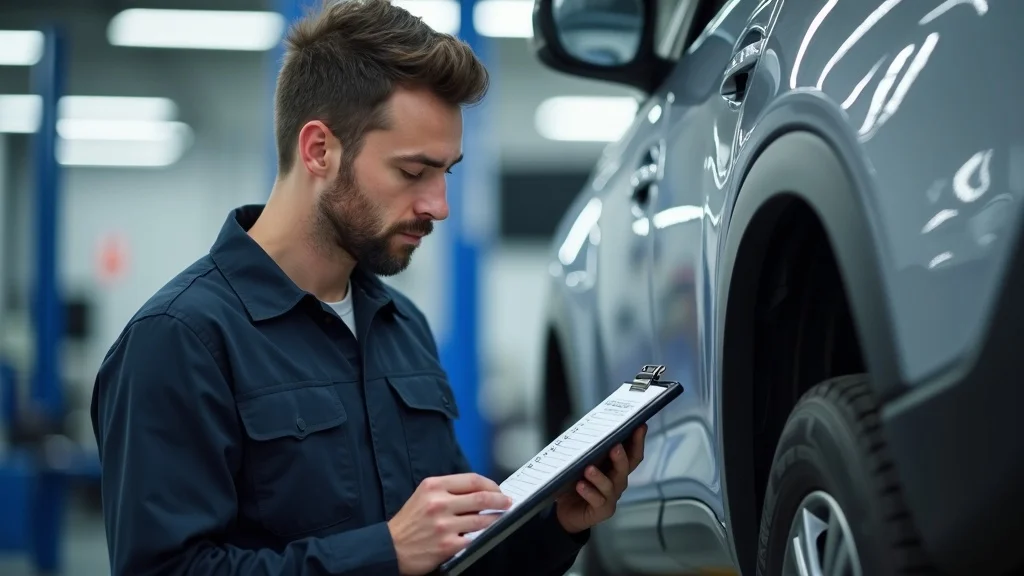
Some worry that faster service may create room for errors. Barich swiftly dispels this concern with practical safeguards: "Redundancy is not wasted effort; it's a quality guarantee. " By adopting checklists and mandatory double-inspections—like re-torquing lug nuts or reinspecting fluid levels as standard operating procedure—dealerships can speed up their cycle times without sacrificing precision.
Barich has helped multiple service departments roll out these redundancies, resulting in near-zero callback rates and heightened customer confidence. Each process step—no matter how small—is verified by more than one set of skilled eyes. This approach underpins both operational trust and the superior customer experience that supports long-term customer loyalty.
Key Takeaway: Transparency and Time Respect Are Your Best Tools for Retention
"Be transparent and have a tremendous emphasis on respect for time. That’s how we get customers to come back."
– Michael Barich, The Fixed Ops Doc
How Transparency Builds Trust and Encourages Repeat Visits

Transparency is the vital twin to speedy, respectful service. According to Barich, nothing erodes customer confidence faster than lack of communication or hidden delays. He stresses, "Customer loyalty is earned when dealerships proactively update, educate, and involve clients every step of the way. "
Whether it’s sending real-time progress updates, sharing digital service summaries, or being upfront about any delays, open communication assures customers you value their time and trust. This not only prevents dissatisfaction in the moment but ensures that the memory of a fair and transparent experience lingers, bringing clients back for every future need. For today’s digitally savvy consumers—who have options a click away—openness is a true differentiator in service retention strategies.
Simple Steps Dealerships Can Take Today to Honor Customer Time
| Traditional Service Approach | Express Maintenance Strategy |
|---|---|
| Single technician per vehicle | Two technicians per vehicle |
| 60+ minutes per basic service | 45 minutes or less service time |
| Customer waits longer; less scheduling flexibility | Higher throughput; better customer convenience |
| Limited quality checks | Built-in redundancies to ensure service quality |
As Barich highlights, small process changes can yield outsized improvements in service retention. Shifting to a two-technician express maintenance setup; building redundancy with detailed checklists; striving for sub-45-minute turnaround for routine services—these steps aren’t just operational tweaks, they’re strategic moves proven to retain customers.
Dealerships that institutionalize these strategies report significant drops in appointment no-shows, greater appointment volume, and rising CSI scores. Barich urges managers: “Get serious about identifying workflow bottlenecks and empower staff with systems that naturally lead to transparency and better time management. ” These aren’t merely industry buzzwords. They are the foundational habits of market-leading service departments.
Final Thoughts: Transforming Service Departments into Customer Loyalty Engines

Elevating Fixed Operations with Proven Service Retention Strategies
From initial appointment to final handoff, every minute matters. Michael Barich’s consulting playbook at The Fixed Ops Doc has proven that when dealerships ruthlessly prioritize the customer’s time and back it up with transparent, efficient, and redundant processes, loyalty—and profitability—follows as a natural result. The path to becoming a customer loyalty engine isn’t paved with marketing gimmicks but with operational excellence and respect.
Next Steps for Dealership Leadership to Capitalize on Customer Loyalty
- Analyze current service operation workflows for bottlenecks
- Implement express maintenance teams for routine services
- Train staff on transparency and punctual communication with customers
- Measure customer feedback focused on time respect and service quality
For More Expert Guidance and Customized Consulting, Visit FixedOpsDoc.com
Ready to take your service retention strategies to the next level? For personalized consulting and proven frameworks that drive repeat business and customer loyalty, visit The Fixed Ops Doc or call: (708) 744-5425.
Dealerships that embrace these techniques today will shape the market tomorrow. Take the next step—your customers (and your bottom line) will reward you.



Write A Comment