
When most churches think about Sunday morning presentation design, they picture PowerPoint. A few slides. Some song lyrics. A Bible passage. Maybe a notice or two. Job done.
But in a digital-first world, that mindset quietly sabotages your ministry.
Digital-first church communications—designing for social, mobile, and Sunday screens at once—is no longer a “nice to have. ” It’s the backbone of how people see, hear, and experience your church’s mission, whether they’re in the building, watching on YouTube, or catching a 30-second clip on Instagram.
I’ve spent years working with churches across the UK, and I see the same tension repeat: you’re trying to reach people everywhere with visuals built for one place. One slide deck stretched thin across Instagram, YouTube, and the projector. The result? Confused branding, low engagement, and a sense that “digital” just doesn’t work for you.
It’s not a lack of heart. It’s a lack of system.
This article will show you how to build that system—so your digital-first church communications actually work on social, mobile, and Sunday screens at once, even with a limited budget and just a couple of hours a week.
Why Copy-Paste Design Kills Digital-First Church Communications
Great church communication isn’t PowerPoint—it’s a mission on display, not a slide deck on a screen.
Dan Nichols
Most churches treat Sunday visuals as a technical task: “Who’s on PowerPoint this week?” That thinking leads straight into the status quo trap—slides become static, functional, and disconnected from everything else you’re doing online.
- The “Status Quo Trap”: Treating Sunday visuals like static slides ignores deeper ministry goals. You end up projecting information instead of communicating vision.
- What most churches miss: Every visual—on Sunday, Instagram, YouTube, or your website—is part of the same conversation. It’s not decor; it’s discipleship and outreach in visual form.
- The real cost: When digital-first church communications are not intentional, your congregation sees one “version” of your church on Sunday and a completely different (or non-existent) version online. That inconsistency quietly erodes trust, recognition, and engagement.
In other words, your slides are not just slides. They are front-line expressions of your mission strategy. If they don’t align with your social and mobile presence, people feel the disconnect—often without being able to name it.
Digital-first church communications demand that Sunday screens, social feeds, and mobile content are all reading from the same script.
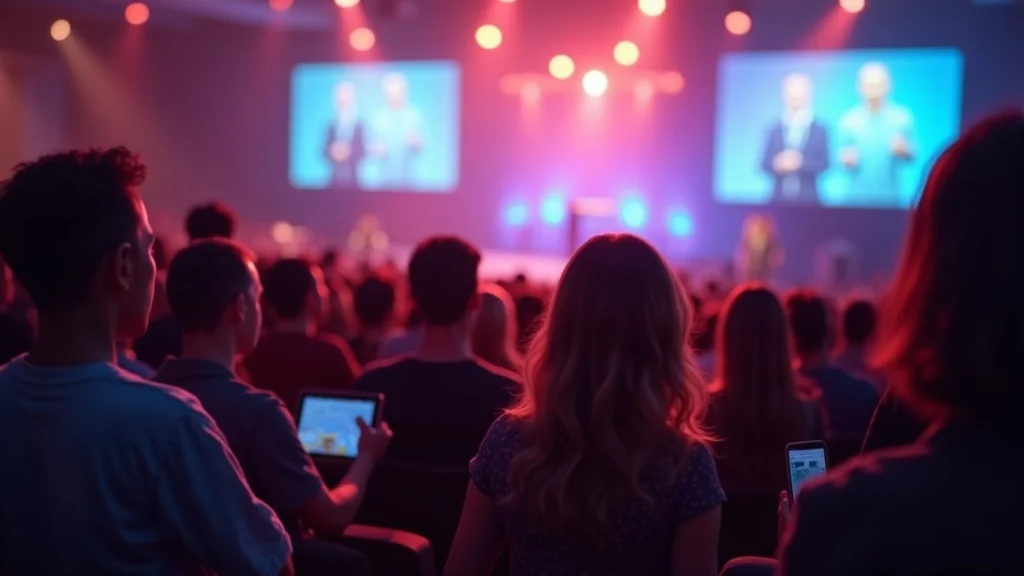
The Multi-Platform Epiphany: Why Digital-First Now Defines Ministry Impact
If you ignore digital, you’re choosing to be absent where your people actually live.
Dan Nichols
We now live in a world where the average person moves seamlessly between screens: phone, laptop, TV, tablet, projector. The church is not exempt from that reality; it sits right in the middle of it.
- My epiphany: There was a point where I realised that “in-building only” communication was quietly shrinking ministry impact. People weren’t less interested in church; they were just living more of their lives online. The message stayed strong, but the medium lagged behind.
- A real story: I worked with a local church that originally used their Sunday sermon slides as their “content strategy.” They’d screenshot slides and post them to social. Engagement was virtually zero. Once we reworked their approach—short vertical clips for Instagram Reels, clean thumbnails for YouTube, and focused, legible Sunday screens—their engagement didn’t just rise; their online community actually started to feel like a community. Comments appeared. Shares increased. People arrived on Sunday saying, “I saw that clip this week and had to come.”
- The bigger picture: Across the UK, roughly three-quarters of adults use multiple screens every week. That means multi-platform outreach is not optional; it’s the basic context in which ministry now happens.
Digital-first church communications isn’t about chasing trends. It’s about recognising where people spend their attention and making sure your message shows up there in a way that feels natural, clear, and compelling.
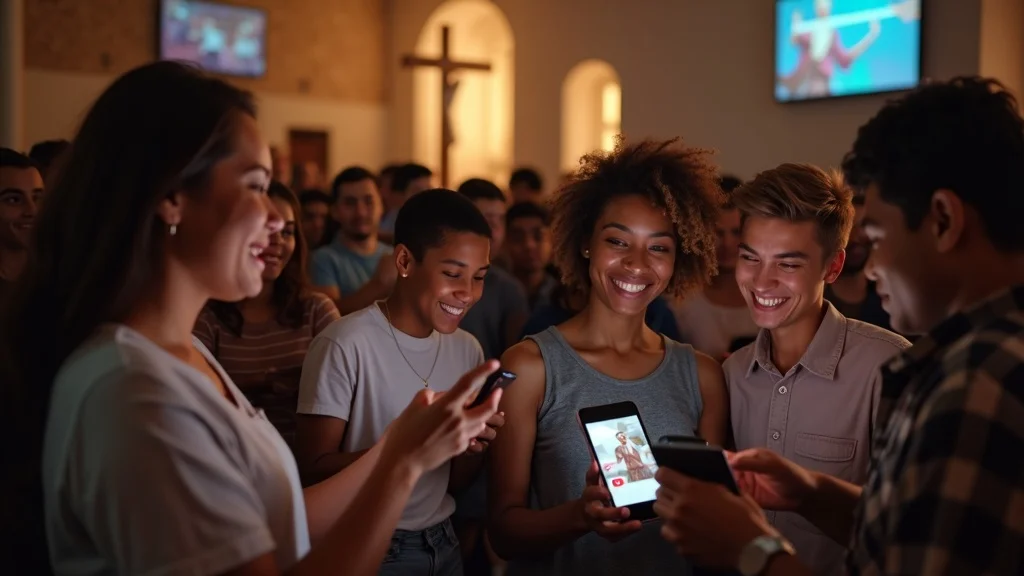
The 3-Point Master System: Achieving Unified Design with Limited Resources
The number one pain point I hear from UK churches is simple: “We can’t do everything. ” You don’t have a full-time designer. You don’t have a media team. You have someone faithful, a bit of time, maybe a small budget—and an overwhelming list of channels to cover.
The answer isn’t “do more. ” The answer is “build a system. ” Here’s the 3-step approach I use to help churches unify their design across social, mobile, and Sunday screens without burning out.
Step 1 – Audience-Driven Content: Know Who You Serve and Design Backwards
You can’t reach people you don’t understand. Design for their real world, not your ideal world.
Dan Nichols
Before anyone opens Canva or PowerPoint, the first question must be: Who are we talking to, and how do they actually behave online? Digital-first church communications start with people, not platforms.
- Quick win: Map your audience’s real platforms. Are your teens on Instagram and TikTok? Are your young families watching YouTube on TV? Are your older members mostly engaging via Facebook and Sunday screens? Sketch that out on paper.
- Design backwards from habits: If your people mostly watch short videos on their phones, design content that works in that format first, then extend it to Sunday. Don’t start with a dense landscape slide and try to squash it into a vertical Reel.
- Real example: Say you’ve preached a 35-minute sermon. Instead of uploading the whole thing and hoping for views, cut three 30–60 second Shorts: a key quote, a powerful story, a single clear application. Post those to Instagram and YouTube Shorts with a simple CTA: “Watch the full message on YouTube.” Use one of those same key points as a bold, clean line on your Sunday recap slide next week.
This is how digital-first church communications work in practice: capture attention with short-form, mobile-friendly moments, then deepen engagement with longer-form content and in-person gatherings.
For churches looking to strengthen their visual identity as part of this process, exploring branding and logo design strategies can help ensure your communications are instantly recognisable across every platform.

Step 2 – The Master Template Approach: One System, Many Platforms
The biggest mistake I see churches make is trying to design from scratch for every platform, every week. It’s exhausting and completely unsustainable. The solution is to create one “Design DNA” that flexes everywhere.
- Build a single Design DNA: Decide on your core colours, fonts, logo placement, and visual style (photography vs illustration, minimal vs textured). This is your visual identity. Everything—from Sunday slides to Instagram posts to YouTube thumbnails—should feel like it’s part of that same family.
-
Practical workflow: In tools like Canva or Photoshop, build master templates for:
- Instagram square (feed) and vertical (Stories/Reels)
- YouTube thumbnail (16:9 landscape)
- Sunday screen (16:9, large type, high contrast)
- Resource reality: Spend about 80% of your time designing and refining the master template for a sermon series or campaign. Then use the remaining 20% to resize and lightly tweak versions for each platform. That’s where your time savings and consistency come from.
When you do this well, people recognise your content instantly, whether they see it on a phone or on a projector. That recognition builds trust and makes your message easier to follow.

Step 3 – Balance Brand Consistency and Platform Optimisation
Consistency doesn’t mean cloning. One of the most costly design errors I see is taking a Sunday slide and simply dropping it onto Instagram or YouTube without adaptation. The content may be the same, but the context is completely different.
- Respect each channel’s rules: Don’t force a landscape sermon graphic onto Instagram’s square grid. On mobile, tiny text is unreadable, and complex layouts become noise. Let your brand be recognisable, but let the design breathe in each format.
- Screen vs mobile: On Sunday, use bold headline text, high contrast, and enough white space so people at the back can read without effort. On mobile and social, think simpler visual storytelling: a short phrase, a strong image, and room for captions to carry more detail.
- Actionable tip: Take your next three planned posts and ask: “Does this design fit how people naturally use this platform?” If you have to pinch-zoom, squint, or tilt your head, it’s clashing with native behaviour. Redesign within your template so it feels natural to that space.
Digital-first church communications succeed when your message is anchored in one clear idea, but the expression is optimised for each platform your people actually use.
From £500 and 2 Hours: Make Every Design Minute Count
Let’s answer the very practical question I hear again and again: “If we’ve got just £500 and two hours a week for design, how do we prioritise? Where does that money and time go to make the biggest impact across Instagram, YouTube, and Sunday morning?”
Here’s the priority system I recommend.
-
First 30 minutes: Define your audience and essential message.
Get crystal clear on:- Who you’re trying to reach this week or this series (e.g. whole church family, newcomers, youth).
- The one core message or theme (e.g. “Hope in hardship” or “Belonging in God’s family”).
- Where they’re most likely to encounter you first (Instagram, YouTube search, live stream, Sunday in-person).
-
Next 60 minutes: Build or refine your master design system.
Use your £500 over time to:- Purchase a solid, legible typeface pair if you don’t already have one.
- Invest in a small set of high-quality stock images or illustration packs that match your church’s personality.
- Possibly get a designer to build you a base template set once, which you then reuse indefinitely.
- Lock down your colours, fonts, logo placement, and recurring visual elements for the current series or campaign.
- Create the four key templates: Instagram feed, Story/Reel, YouTube thumbnail, and Sunday slide.
-
Final 30 minutes each week: Platform-native tweaks and scheduling.
Don’t waste time redesigning. Use your master templates to:- Drop in that week’s sermon title, key verse, or quote.
- Export correctly sized versions for Instagram, YouTube, and Sunday screens.
- Schedule posts in advance so you’re not scrambling on Saturday night.

Used wisely, £500 and two hours a week can give you a robust, repeatable system for digital-first church communications that supports your ministry for years.
Avoiding the #1 Mistake: Don’t Water Down Your Message Across Platforms
The biggest mistake I see UK churches make when they try to use the same design across Instagram, YouTube, and Sunday morning is this: they stretch one piece of content thin instead of grounding everything in a clear, compelling core message.
They take the sermon title slide, slap it on Instagram, crop it for YouTube, and hope it works everywhere. Technically, it’s the same content. Practically, it’s invisible.
- Anchor in the message, not the slide: Start with the heart—what do you want people to know, feel, or do? Let that single idea express itself differently per platform while still feeling like the same conversation.
- Adapt for impact: On Instagram, that may mean a single phrase in large type over a simple background. On YouTube, a bold thumbnail with a reaction-driven image. On Sunday, a clean, readable slide with the same key phrase and supporting scripture.
- Measure the right thing: The real success metric for digital-first church communications is community engagement, not vanity numbers. Are people commenting, messaging, asking questions, sharing with friends, turning up on Sunday, joining groups? Likes and views are indicators, but actual interaction is the fruit.
When you stop stretching one design thin and instead adapt one clear message for each platform, your communication becomes sharper, not busier.
Quick FAQ: Building Sticky Multiplatform Church Communications
-
How do I spot design drift?
Design drift happens when your visuals slowly lose their connection to your core brand—different fonts creeps in, colours change, layouts become inconsistent. To catch it early, set a weekly 10-minute review where you look at your last few Instagram posts, YouTube thumbnails, and Sunday slides side by side. If they don’t immediately look like they belong to the same church, tighten your templates and re-align to your Design DNA. -
What’s a non-negotiable for effective Sunday screens?
Clarity and legibility. If people can’t read it easily from the back row, it doesn’t matter how beautiful it is. Prioritise large text, strong contrast, and minimal clutter. Every extra line you add competes with the message being preached or sung. In digital-first church communications, Sunday screens should support the moment, not distract from it. -
How can small teams keep up without burning out?
Batch creation is your best friend. Use your master design system to build all the visuals for a series or a month in one sitting—Sunday slides, social graphics, and video thumbnails. Then schedule as much as possible ahead of time. This front-loaded approach frees your week to focus on ministry while keeping your digital presence steady and consistent.
Key Takeaways: The Path to Digital-First Church Communication Mastery
- Unified design isn’t about more slides—it’s about more impact, everywhere. Your goal is not to flood screens with content, but to align every visual with your mission so people recognise and respond to it.
- Start with your people, systemise your design, and optimise for every screen. Begin with real audience behaviours, build a reusable master template system, and let each platform get a tailored version of the same core message.
- Your mission matters too much to lose it in the scroll. In a world of constant digital noise, clear and consistent church communication is an act of stewardship. It helps ensure the gospel you preach on Sunday isn’t drowned out online by everything else competing for attention.

Next Steps: Build Your Own Unified Communication System Now
If you’re ready to stop guessing and start building digital-first church communications that actually work across social, mobile, and Sunday screens, now is the time to act.
- Download the free guide: “5 Steps to Unified Church Communications”. It walks you through, step-by-step, how to create a practical, sustainable design system that serves Instagram, YouTube, and your Sunday services without demanding a full-time designer.
- Book a complimentary 15-minute brand audit. I’ll personally review your current visuals and highlight where your church can strengthen its visual consistency, sharpen its message, and better steward its limited resources.
You don’t need a massive team or budget to communicate clearly in a digital-first world. You need a clear message, a simple system, and the courage to design with Sunday, social, and mobile in mind from the start.
The screens are already on. Let’s make sure what they’re showing is worthy of the mission.
As you continue to refine your church’s digital communications, remember that a strong visual identity is just one piece of the puzzle. For a deeper dive into how branding and logo design can elevate your church’s presence and foster lasting recognition, explore our comprehensive guide on branding and logo design for churches. Investing in your brand is a strategic step toward building trust and engagement, both online and in person—empowering your message to resonate across every screen and every Sunday.


Write A Comment