
Add Row
Add Element
UPDATE
Add Element
  • Home
  • Categories
    • Entrepreneurs
    • Growth Stories
    • Expert Insights
    • Innovators
    • Franchise and Expansion
    • Tools and Services
    • Commercial Property
    • Trends
September 30.2025
1 Minute Read

Why Annual Well Maintenance Plans Save You Money Now

Did you know that homeowners who skip annual well maintenance can pay up to five times more in emergency repairs compared to those with a maintenance plan? If your property relies on a private water well system, ignoring regular upkeep doesn’t just risk your water quality—it could mean sudden, massive expenses. Let’s uncover how annual well maintenance plans protect your wallet and your water, and why taking proactive steps today avoids costly disasters tomorrow.

A Startling Look: The Rising Costs of Neglecting Annual Well Maintenance Plans

For many homeowners, the real shock comes after a neglected well suddenly malfunctions. Without annual maintenance, small problems such as deteriorating pressure tanks or undetected iron bacteria can spiral into emergency service calls—where costs can jump from a few hundred to several thousand dollars, often without warning. The absence of a structured maintenance plan leaves you vulnerable to unpredictable water supply interruptions, expensive part replacements, and the possibility of contaminated drinking water.

The financial risks don’t stop at repairs. Untreated water well maintenance issues may impact your household’s water quality and health. When issues like sediment buildup or pressure tank failures go unchecked, restoring your water well system to safe, dependable operation takes more time—and significantly more money. In contrast, annual maintenance brings routine water testing, cleaning, and calibration, catching problems early and minimizing long-term costs.

Unexpected Expenses in Water Well Maintenance: What Homeowners Face

Homeowners often underestimate the cost of a single repair on their water well system. Emergencies can range from fixing sudden drops in water pressure to replacing parts corroded by iron bacteria. A pressure tank that isn’t calibrated can lead to rapid system wear or even total tank failure, with repairs costing upwards of $2,000. Water treatment system malfunctions may require specialized service calls and potentially expose households to unsafe drinking water, all while expenses stack up. Proactive maintenance plans aren’t just about convenience—they’re a major safeguard against these unexpected and often overwhelming costs.

Worried homeowner reviews water well repair bill—concerned expression, sitting at kitchen table examining documents, water well maintenance plan financial stress

Annual Well Maintenance Plans: The First Line of Defense Against Water Well System Failures

Annual well maintenance plans serve as your home’s strongest shield against water well breakdown. By enrolling in a structured plan, your water well system is checked by licensed or certified professionals each year for signs of trouble. These experts spot pressure tank leaks, test for contaminants like coliform and iron bacteria, and make sure your treatment systems are serviced before problems strike.

Addressing potential issues early offers compelling financial advantages. A proactive maintenance plan covers annual water tests, routine inspections, pressure tank calibration, and priority service in the event of a breakdown—at a predictable, affordable cost. As a result, critical problems are resolved before they require expensive, emergency work. Ultimately, regular water well maintenance is about more than just saving money; it’s about ensuring reliable, healthy drinking water for your family all year long.

What You'll Learn About Annual Well Maintenance Plans

  • How annual well maintenance plans improve water quality and extend system life
  • Ways annual maintenance saves money in the long and short term
  • The essentials of a comprehensive water well maintenance plan
  • What a typical water test covers in a maintenance visit
  • Expert quotes and actionable advice for homeowners

Breaking Down Annual Well Maintenance Plans: Definitions and Core Benefits

What Is an Annual Well Maintenance Plan?

An annual well maintenance plan is a scheduled service agreement with a professional water well contractor. This plan ensures that your water well system undergoes routine inspections, water testing, and required adjustments each year. The goal is to identify early warning signs, prevent water quality problems, and ensure the long-term performance of your private water source.

Unlike one-time emergency repairs, these maintenance plans include all essential checks—like water flow and system pressure—at a fixed yearly rate. This predictable setup helps homeowners budget for care and substantially reduces the risk of sudden, high-cost failures. By working with a licensed or certified well contractor, you guarantee that your system is serviced to industry best practices, maintaining healthy and safe drinking water for your family.
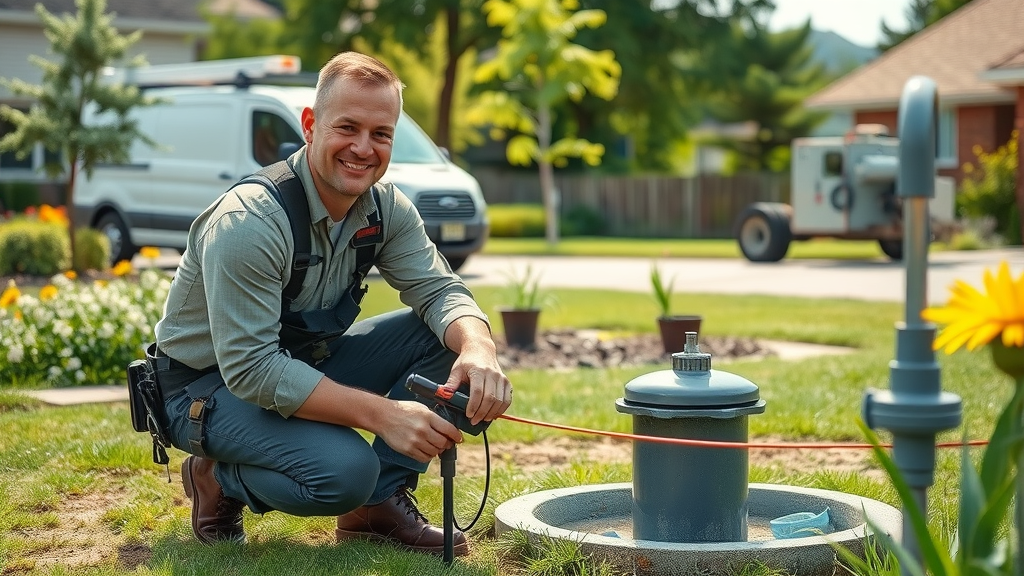
Professional water well technician performing annual maintenance plan inspection—water well system check, pressure tank testing, comprehensive water well maintenance

Key Features of Comprehensive Maintenance Plans for Your Water Well System

The best annual maintenance plans go far beyond a quick look at your pump; they feature a thorough checklist designed to protect every aspect of your water well system. Typical features include yearly water testing for contaminants, detailed inspection of the pressure tank, reviews of your water treatment system, and system cleaning for iron and sediment buildup. Some plans also cover emergency services at a discounted rate and prioritize customer service and fast response times when issues arise.

A comprehensive plan guarantees your water supply remains reliable and safe, while also documenting each inspection and all test results for future reference. Annual check-ups ensure every part of your system is functioning optimally—extending the life of pumps, tanks, and treatment systems, and providing peace of mind that your drinking water is protected year-round. By following a professional maintenance checklist, you address both visible and hidden threats to your water source, preventing major repairs before they ever develop.

How Do Annual Maintenance Plans Prevent Costly Water Well Maintenance Emergencies?

Preventive care is the single most effective strategy for avoiding catastrophic and costly breakdowns. Annual maintenance plans are structured to catch subtle warning signs—like reduced water flow, pressure fluctuations, or treatment system wear—before they evolve into emergencies. Regular water well maintenance includes testing for bacterial contamination, inspecting for sediment buildup that can clog pumps, and verifying proper system calibration.

When you stick with regular, scheduled maintenance, you’re far less likely to end up with expensive problems like total pump replacement, tank failure, or re-drilling a well. Not only does this save you from surprise bills, but you benefit from higher water quality and a longer lifespan for all components.

“An ounce of prevention is worth a pound of cure—especially when it comes to safeguarding your drinking water and investment.”

What’s Included in Annual Well Maintenance Plans for Water Well Systems?

Water Test Procedures and Their Role in Water Quality Maintenance

One of the anchors of any maintenance plan is the annual water test. During this procedure, a trained technician collects and analyzes water samples for contaminants such as bacteria (including iron bacteria and coliform), sediment, minerals, and chemical impurities. These comprehensive tests help detect invisible threats that could put your drinking water at risk and are crucial for keeping your family’s health protected.

Regular water quality testing allows your technician to track changes over time, so they can recommend shock chlorination, cleaning, or specific adjustments to your treatment systems as necessary. By catching water quality issues early, you avoid the need for costly, large-scale filtration or remediation efforts down the road—a simple step that’s covered in most annual maintenance plans.

Close-up of gloved hands holding a clear water sample vial for water test—annual well maintenance, water quality testing near water well system

Pressure Tank and Water Pressure Assessments During Annual Maintenance

Pressure tank health is vital to your water well system’s performance. Each year, technicians run water pressure tests, inspect for leaks, and ensure your tank’s bladder is intact. This prevents sudden drops in household pressure or system strain that can lead to premature pump failure.

If your pressure tank is miscalibrated or faulty, the effects can ripple throughout your home—damaging appliances, disrupting water flow, and leading to expensive, unplanned repairs. With an annual plan, all pressure tank issues are caught and fixed quickly, ensuring optimal water pressure and extending your equipment’s life.

Water Treatment System Evaluation: Ensuring Longevity and Safety

Any home using a water well system typically relies on some form of water treatment. Whether it’s filtration, softening, or advanced purification, annual maintenance ensures each component works effectively against hard water, minerals, or organic matter. During maintenance visits, your contractor inspects for signs of wear, cleans filters, and tests your treatment systems for efficiency.

Routine system reviews and cleaning frequently reveal developing problems before they disrupt your drinking water or lead to expensive repairs. This preventive care not only keeps your water safe but also prolongs the operational life of your filters, softeners, and purifiers—maximizing your investment and delivering consistent, high-quality water.

Detecting Iron Bacteria and Other Common Water Well System Issues

Iron bacteria and other contaminants are a persistent threat in many private wells. Untreated, they create slime that clogs pipes and damages pumps, often detected only when water tastes or smells off. Annual inspections include specific testing for iron bacteria, preventing their spread and stopping small problems from turning into expensive, system-wide failures.

Contractors also check for sediment buildup, system leaks, and other routine threats, ensuring a thorough plan for your well’s safety. This screening is essential not just for water quality, but for maintaining uninterrupted, clean, and healthy water flow to your home.

  • Water quality testing for drinking safety
  • Regular water well cleaning and inspection
  • Pressure tank calibration and checks
  • Inspection for iron bacteria and sediment buildup
Maintenance Task Frequency Estimated Cost w/ Plan Estimated Cost w/o Plan
Water test Annual Included $200+
Pressure tank check Annual Included $150+
Water treatment system review Annual Included $180+
Emergency repairs As needed Discounted $500–$2,000+

Annual Well Maintenance Plans vs. One-Off Water Well Maintenance: Which Is More Cost-Effective?

Comparing Annual Maintenance Plans and Reactive Maintenance Costs

The financial advantage of annual well maintenance plans becomes clear when compared to sporadic, as-needed repairs. While one-off maintenance is reactive and unpredictable, a proactive maintenance plan offers fixed annual costs and bundled services. Without regular maintenance, homeowners often face higher bills from urgent service calls, unforeseen equipment replacements, and severe water system issues that were preventable.

By investing in a plan, the average homeowner saves hundreds or even thousands over a decade, preventing big-ticket repairs and keeping their water well system efficient. You also gain peace of mind—knowing that regular water tests, pressure checks, and treatment system reviews are always taken care of by a professional water well contractor.
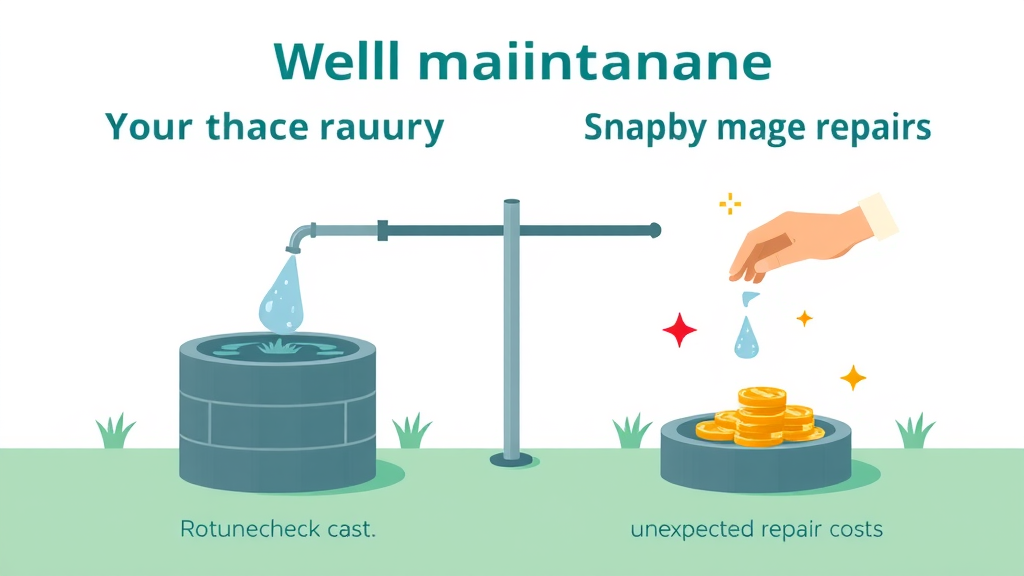
Infographic comparison: annual well maintenance plan vs. unexpected water well maintenance costs—cost savings with regular maintenance plan

Real-Life Case Studies of Savings from Annual Well Maintenance Plans

Consider the case of a homeowner who neglected their annual water well maintenance—when a hidden leak led to pump failure, the emergency bill was over $1,800, excluding the inconvenience of days without water. In contrast, a neighbor with a plan paid under $400 in yearly fees, and their technician caught a similar leak during a routine check—saving money, time, and hassle.

Stories like these are common: regular maintenance helps you catch small problems early and avoid expensive emergencies.

“Proactive annual maintenance plans catch small issues before they become major water well system failures—and can save homeowners thousands.”

How Annual Well Maintenance Plans Improve Water Quality and Health

Protecting Drinking Water: Addressing Contaminants with Regular Maintenance Plans

Clean, safe drinking water is the top priority for every homeowner. Annual well maintenance plans are structured to safeguard your water quality through consistent testing and expert intervention. These plans identify contaminants like coliform and iron bacteria early, keeping your water free from harmful elements and securing your family’s health.

Maintenance visits include essential cleaning and checks for leakage or backflow that could let bacteria or chemicals into your supply. Technicians act swiftly, performing shock chlorination or other treatments so your water system remains free of pollutants, thus making water from your well as reliable as a municipal supply.

Family drinking clear water at home—annual well maintenance plan results, safe water quality, clean drinking water for whole family

Managing Iron Bacteria and Ensuring Safe Water for Your Family

Iron bacteria, if left unaddressed, can affect taste, odor, and even corrode pipes and components. Annual well maintenance plans always include specific checks for these bacteria, which are often invisible until damage is done. If present, a water well technician can apply targeted remedies such as shock chlorination or system cleaning—preventing costly repairs and ensuring your family’s drinking water remains clear, odorless, and safe.

Because iron and other bacteria can quickly multiply in poorly serviced wells, regular maintenance is crucial for uninterrupted, safe water access and overall water quality.

Assessing Water Treatment: Ensuring System Longevity with Annual Maintenance

Well water treatment systems keep minerals and biological contaminants in check. Annual maintenance plans confirm that your filtration, softening, and disinfection devices are operating correctly, extending the system’s life. Their performance is tested reliably—meaning fewer breakdowns, lower running costs, and healthy water supply for years to come.

“Clean, safe drinking water starts with routine water well maintenance—don’t leave your family’s health to chance.”

Step-by-Step Walkthrough of a Professional Annual Well Maintenance Plan Visit

How to Make an Annual Well Maintenance Plan Work for You

Actionable Checklist: Maximizing the Benefits of Annual Maintenance Plans

To get the most from your annual maintenance plan, follow this simple checklist:

  • Schedule yearly appointments with a licensed water well contractor
  • Request full water quality and flow testing at each visit
  • Ensure your pressure tank is inspected and calibrated annually
  • Have treatment systems evaluated and serviced regularly
  • Keep records of all test results, recommendations, and system upgrades
  • Ask for written checklists after each visit to track completed maintenance tasks

Technician and homeowner reviewing annual well maintenance plan checklist—wellhead, maintenance help, pressure tank and water test

Partnering with Water Well Maintenance Experts for Enhanced Savings

Not all wells are the same, and partnering with a professional water well contractor ensures that your maintenance plan is tailored to your specific needs. Experienced technicians know the regional risks—like seasonal iron bacteria blooms or sediment influx—and adapt your plan accordingly. They also offer advice on upgrades for treatment systems or efficient pumps, further saving you money over time.

When selecting a provider, look for certifications, trusted reviews, and clear communication. Maintenance helps when it’s done by skilled professionals who prioritize your safety and value. With the right partner, your annual well maintenance plan truly becomes a long-term investment in your property’s health and savings.

Five Warning Signs Your Water Well System Needs Immediate Attention

People Also Ask: Answers about Annual Well Maintenance Plans

How much does it cost to maintain a well yearly?

Yearly costs for water well maintenance vary, but enrolling in annual well maintenance plans can significantly reduce emergency repair expenses and ensure ongoing water quality. Typical costs range from $200-$500 annually with a plan, compared to much higher one-off fees without regular maintenance.

How to make an annual maintenance plan?

Creating effective annual well maintenance plans starts by identifying required checks such as water testing, pressure tank inspection, water treatment reviews, and scheduling regular appointments with certified professionals.

What maintenance is required for a well?

Essential water well maintenance tasks include water tests for quality, system cleaning, pressure tank assessment, and inspection for contaminants like iron bacteria.

How often should I have my well inspected?

Experts recommend scheduling annual well maintenance to ensure continued water quality, prolong your water well system’s lifespan, and catch issues before they escalate.

FAQs: Common Questions about Annual Well Maintenance Plans

  • Can I perform my own annual well maintenance plan?
  • What does a water test usually detect during maintenance?
  • Is a maintenance plan necessary for new wells?
  • Will an annual well maintenance plan cover emergency repairs?

Key Takeaways: Why Annual Well Maintenance Plans Are a Smart Investment

  • Annual well maintenance plans reduce costly emergency repairs.
  • They ensure safe, high-quality drinking water through regular water tests.
  • Prolong system lifespan by addressing issues proactively.

Ready to Save on Annual Well Maintenance Plans? Contact Us for a Custom Quote

Don’t let your water well system become a financial risk. Contact us at Premierwell@gmail.com today for a tailored annual maintenance plan and start saving money—while ensuring your water stays clean and safe!

Regular maintenance of your well is essential to ensure the safety and efficiency of your water system. The Centers for Disease Control and Prevention (CDC) emphasizes the importance of annual well checks to monitor for contaminants and mechanical issues. Their guidelines, detailed in the article “Well Maintenance,” provide homeowners with steps to protect their wells, including annual testing for contaminants like coliform bacteria and nitrates. (cdc.gov)

Additionally, the National Ground Water Association offers resources to help schedule well water check-ups and provides information on maintaining private water systems. Their recommendations align with the CDC’s, stressing the need for regular inspections and testing to prevent costly repairs and ensure water quality. (cdc.gov)

By following these expert guidelines, you can proactively maintain your well system, safeguarding your water supply and avoiding unexpected expenses.


Tools and Services

0 Comments

Write A Comment

*
*
Please complete the captcha to submit your comment.
Related Posts All Posts
04.06.2026

Unlocking Business Potential: How to Choose the Right Accounting Software

Update Choosing the Right Accounting Software: A Game-Changer for Businesses In today's fast-paced business environment, efficient financial management is crucial for success. Selecting the right accounting software can significantly streamline operations, enhance productivity, and ultimately affect a business's bottom line. While numerous solutions exist, understanding each one’s unique offerings is key to choosing the best fit for your specific needs. Understanding Your Business Needs Before diving into the top accounting software solutions, it's vital to assess your business's unique requirements. Factors such as company size, complexity of financial transactions, and specific features desired can heavily influence the choice. For example, a service-based business might prioritize robust invoicing and expense tracking features, whereas a manufacturing firm may need comprehensive inventory management integrated with accounting functions. Top Accounting Software Options for 2026 FreshBooks: The Choice for Service-Based Businesses FreshBooks is a standout option ideal for small businesses, particularly those providing services. Its user-friendly interface, which boasts a high ease-of-use rating of 4.9, makes it especially attractive for newcomers to accounting. Starting at $21 monthly, it offers powerful invoicing tools and excellent customer support, empowering business owners to focus more on growth rather than mundane bookkeeping tasks. NetSuite: The All-In-One ERP Solution For larger organizations, NetSuite’s robust ERP capabilities cannot be overlooked. This software integrates accounting, inventory, and CRM functionalities, enabling a seamless operation across various business functions. Its customizable quote-based pricing makes it scalable and suitable for enterprises with complex needs, allowing businesses to efficiently manage their global operations. Zoho Books: Affordability Meets Functionality Zoho Books stands out for its affordability, starting at just $15 per month, and offers vital features like automated workflows and multilingual invoicing. It integrates well within the larger Zoho ecosystem, which enhances its capabilities significantly, particularly for small to medium-sized enterprises looking to scale without breaking the bank. QuickBooks Online: The Industry Standard Often regarded as the leading accounting solution, QuickBooks Online thrives with its depth and flexibility in functionalities. Its extensive reporting capabilities and integrations make it suitable for various businesses, ranging from freelancers to established companies. While its pricing can be on the higher side, its robust features justify the cost for many. Wave: The Best Free Option for Small Businesses For microbusinesses and solopreneurs, Wave offers remarkably powerful features without any monthly subscription fees. With capabilities in invoicing, expense management, and basic reporting, it serves as an ideal entry-level solution, although it may lack advanced features as businesses grow. Its ease of use and completely free core features make it a promising choice for those just starting out. What to Consider When Choosing Accounting Software When selecting accounting software, consider scalability, costs, ease of use, and the support offered by the provider. In the early stages, free tools can suffice, but as businesses expand, investing in a more comprehensive solution becomes necessary to accommodate increasing complexities in financial management. A sound strategy includes not only evaluating the immediate functionalities but also considering how these tools fit into your long-term growth plan. Concluding Thoughts: Make a Wise Choice The landscape of accounting software is vast and filled with options tailored for different business needs. Whether you’re a freelancer, a growing service-based company, or a large enterprise, your choice of software can dramatically influence your operational efficiency. Taking the time to match the right solution with your business’s requirements will pave the way for better financial management and sustainable growth.

04.05.2026

Boost Profits Fast with These Service Retention Strategies

In today's fiercely competitive automotive landscape, dealerships can no longer afford to treat service retention as an afterthought. Maximizing loyalty through effective service retention strategies is not just a buzzword—it's the key to sustainable profit growth and a loyal customer base that keeps your service bays humming. But what if the traditional wisdom about retention actually stands in your way? Enter Michael Barich of The Fixed Ops Doc, a consulting authority who has spent decades inside the trenches of dealership service departments, transforming operational headaches into repeat business gold mines. For Fixed Operations Directors, General Managers, Dealer Principals, Service Managers, Automotive Group Executives, and Operations Managers hungry to move the profitability needle, this article dives headlong into Barich’s field-proven approach—a customer-centric philosophy and process-driven execution that truly deliver “aha!” moments for those ready to put old myths to bed. Michael Barich on Breaking Dealer Misconceptions About Service Retention Dealers often build their service retention strategies on assumptions that, while comfortable, may be fundamentally flawed. According to Michael Barich, one of the most deeply rooted misconceptions is that loyalty can be achieved simply by forcing customers to fit into the dealership’s operational schedule. In Barich’s extensive consulting experience, this backwards approach doesn’t just kill loyalty—it actively encourages customers to look elsewhere. "Many dealers have it wrong—they expect customers to work on the dealer’s schedule instead of theirs. That disconnect kills loyalty." — Michael Barich, The Fixed Ops Doc Barich emphasizes that dealerships must flip their mindset. Too many still expect customers to come back purely out of legacy habit, when in truth, the modern customer’s loyalty is earned by adapting to their needs and schedules. The expert’s perspective is that dealers who fail to recognize this shift suffer not only in lost retention, but also in long-term profitability. Dealers who prioritize convenience and customer experience are light-years ahead—they don’t just keep customers, they multiply them through word-of-mouth and recurring business. Why Respecting Customer Time is the Ultimate Loyalty Booster in Service Retention Strategies Service retention strategies only work when dealerships respect the single most valuable resource any customer has: their time. As Barich points out, “We have to start respecting customers’ time by delivering quality service quickly—an oil change and tire rotation should never take more than 60 minutes. ” The underlying truth is that in the fast-paced world of 2026, customers view time as non-negotiable. If a dealership forces a customer to choose between waiting for hours or finding a competitor, that customer rarely comes back. "We have to start respecting customers’ time by delivering quality service quickly—an oil change and tire rotation should never take more than 60 minutes." — Michael Barich, The Fixed Ops Doc According to Barich, respecting time is foundational to trust—and trust is the engine of repeat business. When service takes too long, customers feel undervalued, regardless of price or promotion. In his consulting work, Barich has repeatedly seen how slashing service cycle times directly translates to measurable increases in customer retention. Efficiency becomes the ultimate differentiator: not only does it reduce operational costs, but it also dramatically increases the likelihood that customers will return for future needs, thus doubling down on total profit per client. The Cost of Convenience: How Dealer-Centric Scheduling Undermines Repeat Business Barich is unapologetically blunt: the legacy approach of dealer-centric scheduling is a relic that costs businesses more than they realize. When dealerships prioritize workflow optimization at the staff or facility level, often at the expense of the customer’s availability, the message sent is clear—dealer convenience trumps guest satisfaction. Service retention strategies fall flat if customers feel ‘shoehorned’ into inconvenient appointment times or left waiting unnecessarily long. The result? Lowered goodwill, increased customer churn, and a damaged reputation. In Barich’s experience, customers who feel their time is disregarded are not just less likely to return; they’ll often share their frustrations widely. Conversely, streamlining operations around customer-preferred time slots—backed by transparent communication on service duration—boosts the likelihood of repeat visits. Dealerships that align operations with customer convenience create advocates, not just clients. Express Maintenance: The Proven Formula to Accelerate Service Retention and Profits When it comes to practical solutions, Barich pulls no punches—transition to express maintenance models is the most powerful game-changer he’s witnessed. According to his expertise, deploying two technicians on a single express service bay allows dealerships to handle triple the customer volume per hour without sacrificing precision or customer satisfaction. The multiplier effect is not just theoretical—it’s a math-proven strategy that unlocks exponential growth. "Switching to a two-technician express service model lets the same service bay push through three cars per hour without sacrificing quality. The math doesn’t lie." — Michael Barich, The Fixed Ops Doc Barich shares practical insights: by dividing labor and integrating systematic checks, a standard express maintenance workflow consistently delivers a complete oil change and tire rotation in under 45 minutes per vehicle. This increases bay throughput, elevates technician productivity, and—most importantly—inspires customer loyalty by drastically reducing wait times. Quality control remains non-negotiable as streamlined redundancies ensure nothing falls through the cracks, from torqueing lug nuts to confirming drain plug security. As Barich teaches, “You simply can’t argue with the math or the ROI on that level of commitment. ” Implementing Redundancies to Guarantee Service Quality and Speed The cornerstone of Barich’s blueprint is building redundancies into the express service process. It isn’t just about speed—it’s about ensuring every step is completed right, every time. With two-person teams, tasks are cross-checked and completed in parallel, enabling efficiency without compromise. Barich underscores that each express bay becomes a mini production line, blending mechanical precision with human oversight for relentless reliability. Double technician teams for express maintenance Consistent 45-minute express services per vehicle Built-in checks: re-torque lug nuts, inspect drain plugs, and fluid levels Implementing such a model not only boosts service retention but also enhances staff accountability and confidence. Barich notes that when every technician is part of a seamless, repeatable process, errors plummet and customer satisfaction soars. Express maintenance, with redundancies locked in, reinforces to both staff and clients that your dealership values speed and excellence—a message that delivers profits and loyalty in equal measure. Key Takeaway: Transparency and Timely Service Are Non-Negotiable for Customer Retention According to Barich, the foundation for long-term customer retention—and the growth that follows—lies in two pillars: absolute transparency and a relentless respect for the customer’s time. Dealerships that openly communicate service expectations, deliver on their promises, and shorten cycle times position themselves as the obvious, trustworthy choice for ongoing automotive care. "Be transparent and massively emphasize respect for the customer’s time if you want them to come back." — Michael Barich, The Fixed Ops Doc Barich's guidance is to treat these principles as cultural, not just operational. When transparency and efficiency become part of every team member’s DNA, customers feel genuinely seen and valued. This builds emotional loyalty—something far harder to break or imitate than any coupon or discount promotion. In a market flooded with promises and promotions, Barich’s strategies anchor loyalty in authentic actions, not empty talk or superficial perks. Actionable Tips for Fixed Ops Leaders to Enhance Service Retention Strategies Barich knows that theory alone doesn't drive results. To help dealership leaders put these concepts into practice, he recommends a focused set of actionable steps: Audit current service cycle times to identify bottlenecks Train staff on express maintenance protocols emphasizing speed and accuracy Use performance metrics to measure ROI of fast service initiatives Communicate openly with customers about service times and process improvements Leaders who implement these strategies see immediate improvements—not just in operational efficiency, but in how customers perceive and value their dealership. According to Barich, it’s these operational details, executed consistently, that separate profit leaders from lagging peers. Understanding the Bigger Picture: How Service Retention Fits Into Dealership Profitability The impact of effective service retention strategies ripples far beyond the service bay. As Barich explains, every improvement made to streamline service and respect customer time directly boosts dealership profitability. Customer satisfaction isn’t just a feel-good metric—it translates into tangible revenue growth by both increasing repeat visit frequency and raising the average customer lifetime value. For progressive automotive leaders, the fixed operations department offers the most controllable lever for long-term profit maximization. Barich’s consulting work emphasizes the simple math: the greater the throughput and loyalty, the higher the revenue base, with fixed ops forming the backbone of dealership resilience through market cycles. In 2026, the most successful groups are those who seamlessly align retention strategies with bottom-line results. Common Myths About Service Retention Strategies Debunked The expert’s perspective is that many dealership leaders still believe service retention is too costly or that quick service undermines quality. Barich debunks these myths with data and experience: "It costs far more to replace a lost customer than to retain one. " In reality, streamlined express service paired with robust quality checks reduces rework, lowers churn, and builds trust. Barich’s proven results show that properly executed, these strategies are both cost-effective and operationally scalable. Another common misconception is that customers just want the lowest price. In truth, today’s vehicle owners value speed, accuracy, and transparency—they’ll gladly pay a fair rate for service that fits their lives and delivers as promised. Barich’s work with leading dealerships proves: if you win back their time, you win their loyalty and their business. The ROI Impact: Faster Services Mean More Throughput, Higher Satisfaction, and Increased Revenue When dealerships properly apply service retention strategies, the business case is as straightforward as it is compelling. By shrinking wait times and multiplying daily throughput per bay, labor utilization spikes—and with it, overall revenue and profit margins. Staff morale improves as technicians see results and customers respond with appreciation and loyalty. Reduce customer wait times and increase goodwill Maximize labor productivity with efficient technician deployment Boost repeat business through positive service experiences The ROI isn’t just found in numbers on a spreadsheet—it becomes evident in higher CSI scores, better retention metrics, and organic growth through enthusiastic referrals. Barich’s consulting clients consistently transform into local market leaders, setting a new bar for what modern fixed operations can achieve. Next Steps: Transform Your Service Department into a Loyalty and Profit Powerhouse Implementing Barich’s proven service retention strategies gives your dealership a clear advantage. The time to act is now—customers no longer wait for outdated processes. Elevate your service department with workflows and scheduling built on customer-first principles: Adopt express maintenance workflows Invest in team-based servicing Prioritize customer-centric scheduling Explore Customized Consulting to Elevate Your Fixed Ops Performance If you’re ready to take your fixed operations to the next level, now is the moment to implement these insights. Action—and execution—separate leaders from laggards in today’s market. For a deeper dive into customized service retention solutions and to unlock the full profit potential of your service department, contact The Fixed Ops Doc or call (708) 744-5425. Put Michael Barich's expertise to work and transform your dealership into a loyalty and profit powerhouse.

04.05.2026

Discover the Best Free Business Software Solutions to Empower Your Small Business

Update Unlocking Free Business Software Solutions for Small Businesses In today’s fast-evolving business landscape, small businesses often face the task of managing operations seamlessly while keeping costs low. With various free business software solutions available, harnessing technology can now be more accessible and efficient than ever. Let’s explore some standout tools that can transform your daily operations. EngageBay: The CRM Powerhouse First on the list is EngageBay, which offers a free customer relationship management (CRM) platform allowing small businesses to manage up to 250 contacts. This solution enhances not only customer interactions but also facilitates better engagement through its integrated sales pipeline and marketing features. Effective CRM tools like these are crucial for small business owners seeking to improve their connection with clients without overwhelming their budgets. Wave: Simplify Your Finances Next, we have Wave, which allows unlimited invoicing and estimates, completely free. For business owners feeling bogged down by financial paperwork, Wave simplifies billing from anywhere, ensuring that administrative tasks do not detract from focusing on core business activities. Mobile access ensures that invoicing can be handled efficiently, making it a go-to tool for many small businesses. MailerLite: Email Marketing Made Easy Connecting with customers effectively through email marketing is essential, and MailerLite's free plan caters to businesses with up to 1,000 subscribers. Features include dynamic content capabilities, allowing personalized messages to enhance customer engagement. By integrating MailerLite with Zapier for automation, businesses can streamline communication tasks without excessive manual input. Trello: Organize Your Projects As one of the most popular project management tools, Trello allows users to create unlimited boards and tasks at no cost. With a user-friendly interface, businesses can efficiently organize their projects, enhancing productivity. Utilizing Trello can create a visual roadmap for tasks, enabling teams to collaborate seamlessly on various initiatives. Zapier: Automate Your Workflows For those looking to enhance productivity, Zapier connects multiple applications, automating workflows for increased efficiency. By reducing the number of manual tasks, small businesses can focus on growth while ensuring that their tools work in synchrony. Future-Proofing with Free Business Solutions Leveraging these free tools, small businesses can significantly impact their efficiency and customer engagement strategies without incurring heavy costs. As market demands shift, the ability to adapt and integrate these software solutions prepares small business owners for sustainable growth. Each tool previously discussed offers specific advantages, but when combined, they create a robust infrastructure capable of handling various business tasks. Practical Tips for Choosing the Right Tools Choosing the right software tools can feel overwhelming, so here are some practical tips for small business owners: **Assess Your Needs:** Determine what areas of your business need the most support, such as CRM, invoicing, or project management. **Explore Integrations:** Ensure the tools you choose can easily connect with each other, minimizing data silos. **Check for Scalability:** Look for solutions that can grow with your business, offering paid versions or features when needed. **Read User Reviews:** Gain insights from other small business owners to find out what works best in real-world applications. **Trial the Software:** Many platforms offer free trials or free tiers; use these to understand their functionality before committing. Conclusion: Empower Your Small Business While technology can seem daunting, utilizing free business software solutions can set your small business on the path to success. By leveraging tools like EngageBay, Wave, MailerLite, Trello, and Zapier, you can streamline operations, enhance customer relations, and improve overall productivity, all while keeping costs manageable. Embrace these technologies to empower your small business today!

Terms of Service

Privacy Policy

Core Modal Title

Sorry, no results found

You Might Find These Articles Interesting

T
Please Check Your Email
We Will Be Following Up Shortly
*
*
*