UPDATE
  • Home
  • Categories
    • Entrepreneurs
    • Growth Stories
    • Expert Insights
    • Innovators
    • Franchise and Expansion
    • Tools and Services
    • Commercial Property
    • Trends
July 06.2026
1 Minute Read

Struggling with sales and marketing alignment? Here's the fix

If you’re a business leader feeling the pain of wasted leads, slow handoffs, or a sales pipeline that leaks opportunities, this may be the transformative fix you’ve been missing: sales and marketing alignment. As Ken Tucker—pioneering founder of Growth Officer IQ and the visionary mind behind the ‘Fractional Growth Officer’ model—knows firsthand, SMBs cannot afford for sales and marketing to operate in silos. When these teams operate as a united front, powered by strategic automation and AI, revenue grows, costs drop, and brand reputation soars. In this must-read guide, Ken reveals why aligning your sales and marketing automation isn’t just a best practice—it’s the true lever for sustainable SMB growth in 2026 and beyond.

Ken Tucker's Core Insight: Why Sales and Marketing Alignment is the Ultimate Revenue Lever for SMBs

According to Ken Tucker of Changescape Web, the biggest challenge facing small and mid-sized businesses isn’t a lack of leads—it’s the alarming numbers slipping through the cracks. Even with multiple channels driving inquiries, many businesses “have no idea how many leads they’re leaking and the variety of sources coming in unchecked. ” This insight isn’t just anecdotal; it reflects years of consulting with ambitious SMBs where a lack of cohesive processes leads to squandered potential and stagnated growth.

Small business team collaborating on sales and marketing alignment strategy with digital devices and analytics charts in a bright modern office
"The number 1 challenge SMBs face is how many leads they’re leaking, and the variety of sources coming in unchecked." – Ken Tucker, Changescape Web

Sales and marketing alignment ensures that these leads aren’t simply “captured,” but are rapidly followed up, nurtured, and converted. In Ken’s experience, it’s the seamless synergy between these departments—enhanced by automation and AI—that unlocks new revenue streams and creates competitive advantage in crowded markets. The real magic? Not just plugging holes, but building a growth engine that works on autopilot while your team stays focused on high-value activities.

Maximizing Lead Capture and Rapid Follow-Up with AI-Driven Automation

As Ken emphasizes, speed isn’t just important—it’s everything. In the modern marketplace, response times can mean the difference between winning and losing a sale. Too many SMBs believe that capturing a lead is enough, when in reality, response velocity is the ultimate differentiator. The harsh truth, as Ken states, is, “You gotta capture every lead and respond very fast. Speed of response is critical. ” But how do you ensure your team responds with both consistency and urgency, especially as lead volumes rise and channels proliferate?

"You gotta capture every lead and respond very fast. Speed of response is critical." – Ken Tucker, Changescape Web

Ken’s proprietary approach is built around automating every step of the journey—from capturing inquiries to instantly routing them to the right rep, setting enforceable service level agreements (SLAs), and leveraging AI to prequalify leads before a human even makes contact. This isn’t about replacing your sales team—it’s about empowering them to focus only on the most valuable, ready-to-buy prospects.

  • Automate lead capture to stop leaks
  • Notify the right people instantly
  • Set clear service level agreements to speed follow-up
  • Use AI to prequalify leads ready to buy
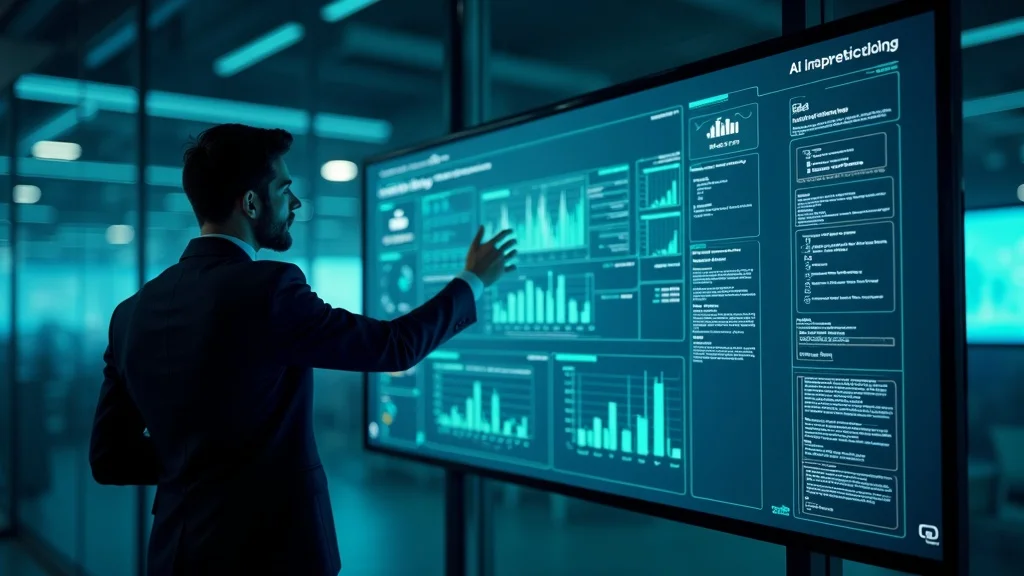
AI dashboard interface for automating lead capture, sales notifications, and alignment analytics in SMBs

Proven Results: How AI-Driven Sales and Marketing Alignment Transformed a California Painter’s Business

Theory is one thing—tangible results are another. Ken recalls the turnaround of a California painting business drowning in untracked inquiries and missed appointments. Upon implementing an AI-driven sales and marketing automation solution, the company streamlined its processes, eliminated manual bottlenecks, and empowered customers to self-book appointments seamlessly. The result? Accelerated response times and a dramatic jump in lead-to-sale conversions.

"They improved response times and conversion rates by automating lead capture and allowing customers to book appointments automatically." – Ken Tucker, Changescape Web

This real-world transformation demonstrates why alignment isn’t optional. With every inquiry instantly captured, categorized, and acted upon—backed by AI-driven lead scoring—this SMB not only recaptured lost revenue but set a new standard for customer experience. Ken affirms that aligning your sales and marketing automation system is the ultimate catalyst for scaling SMB revenue in a sustainable way.

Closing Process Gaps to Scale SMB Revenue with Strategic Automation

According to Ken, too many businesses remain in a “Tactical Trap”—patching together disconnected tools, marketing tactics, and manual handoffs that inevitably create gaps in the pipeline. The antidote? A coherent, AI-enhanced workflow that plugs every leak, eliminates distractions, and operationalizes sales and marketing alignment at scale. Ken’s methodology is ruthlessly pragmatic: “Find the gaps, fill the gaps, and automate everything you can—so talent can focus on building relationships, not chasing paperwork. ”

  1. Identify technology and process gaps causing lead leakage
  2. Eliminate distractions with automated workflows
  3. Leverage AI to plug the gaps and scale lead conversion

Small business owner using sales and marketing alignment dashboard for appointments and analytics tracking

Ken’s perspective is that sales and marketing alignment isn’t about outsourcing critical thinking to machines—it’s about enabling your team with smart automation that reduces error, speeds delivery, and magnifies the impact of your human capital. This blend of high-touch and high-tech is at the heart of Growth Officer IQ’s transformative results for SMBs nationwide.

Key Takeaways for Business and Sales Leaders on Sales and Marketing Alignment

For CEOs, owners, and revenue leaders navigating today’s competitive landscape, the message from Ken Tucker is clear: If you don’t align your sales and marketing automation, you’re not just losing leads—you’re eroding future growth. Automation is the vehicle, but alignment is the destination that ensures every lead gets pursued, every opportunity gets maximized, and every dollar spent delivers measurable ROI.

  • Alignment ensures that no lead slips through the cracks
  • Automation drives faster handoff and response times
  • AI-powered prequalification increases sales readiness
  • Clear internal agreements optimize sales follow-up performance

Ken’s unique value lies in his ability to make these complex systems accessible, actionable, and tailored for SMB realities. Leaders looking to future-proof their business should consider that sales and marketing alignment isn’t just a competitive edge—it’s the new baseline for operational excellence in 2026.

Addressing Common Misconceptions About Sales and Marketing Automation

Contrasting business teams: one disorganized and chaotic, the other calm with automated digital sales and marketing workflows

Despite mounting evidence, many SMB leaders still view automation with skepticism—fearing it will depersonalize sales or replace skilled employees. Ken debunks these myths, highlighting that automation enhances—not diminishes—productivity and human connection. “Automation exists to eliminate the busywork,” he asserts, “so your team has more meaningful conversations and delivers real value. ”

  • Automation replaces people – Reality: Automation enhances productivity
  • Leads come only from a single source – Reality: Leads stream from multiple diverse channels
  • Alignment is optional – Reality: Alignment is critical for maximizing revenue growth

As Ken Tucker’s clients have learned, integrating AI and automation builds stability, consistency, and reliability—freeing skilled staff to focus on creative, high-impact activities. The result? A business that’s not just resilient, but positioned to outpace even larger competitors.

Put Ken Tucker’s Expert Strategies into Action

"There are so many gaps — whether process, technology, or just distractions — so it’s vital to use automation and AI to plug those and accelerate growth." – Ken Tucker, Changescape Web

Ready to make the jump from tactical patchwork to a strategic, outcome-driven system? Ken Tucker’s roadmap starts with a comprehensive audit of your current sales and marketing lead flow—mapping every step a prospect takes, from first inquiry to closed deal. Next, implement AI-powered tools to capture, score, and route leads, ensuring no opportunity escapes notice. Establish clear, enforceable SLAs between your teams so everyone knows exactly how to respond, when, and why. Finally, build a culture of continuous improvement—using data to optimize response times and drive ever-higher conversion rates.

  • Audit your current sales and marketing lead flow
  • Implement AI tools for lead capture and qualification
  • Establish clear service level agreements between teams
  • Continuously monitor and optimize lead response speed

Sales and marketing alignment strategies session with sales leaders reviewing AI-powered lead workflows

According to Ken, the fastest-growing SMBs aren’t those spending more—they’re the ones who align smarter, automate ruthlessly, and never let a lead go stale.

Next Steps: Schedule a Marketing Clarity Call with Ken

The time to align sales and marketing is now. Book your complimentary Marketing Clarity Call with Ken Tucker—where you’ll uncover hidden leaks, blueprint your ideal automation stack, and set the course for transformative growth in 2026. As Ken puts it, “It’s not just about more leads. It’s about capturing, qualifying, and converting them smarter and faster than your competition. ” Align your teams. Power up your business.

Don’t let another promising lead slip through the cracks. Embrace sales and marketing alignment to maximize every opportunity, outpace your competitors, and future-proof your growth. Reach out to Ken Tucker and Changescape Web today—start your journey toward a bulletproof, scalable customer generation machine.

To deepen your understanding of sales and marketing alignment, consider exploring the following resources:

  • “Sales and Marketing Alignment: A Step-by-Step Guide for 2026” (inbeat.agency)

This guide offers a comprehensive system to achieve alignment, emphasizing shared revenue goals, unified lead definitions, and continuous feedback loops.

  • “7 Sales and Marketing Alignment Best Practices” (infuse.com)

This article outlines seven best practices for building a unified, buyer-centric engine, including shared strategy, measurement, and coordinated campaign planning.

If you’re serious about enhancing your business’s growth and efficiency, these resources will provide valuable insights and actionable strategies to align your sales and marketing efforts effectively.

Expert Insights

0 Comments

Write A Comment

*
*
Please complete the captcha to submit your comment.
Related Posts All Posts
07.04.2026

Unlock the Magic of human-driven ai marketing Today

Ken Tucker's Core Insight: Human-Driven AI Marketing Is the Future of High-Quality Lead Generation "Most people don’t realize that humans can actually drive AI and have the ability to make AI speak in the voice of the business or the expert." — Ken Tucker, Changescape Web As we launch headfirst into the digital future, human-driven AI marketing is not just another fleeting buzzword—it's the defining force behind high-quality lead generation for modern growth-minded businesses. At the forefront of this revolution is Ken Tucker of Changescape Web. Drawing upon decades of elite marketing experience and cutting-edge AI integration, Ken champions a strategic approach where technology is wielded skillfully by human insight—not the other way around. Business leaders, CMOs, and sales directors increasingly face a world where AI marketing tools are omnipresent. The difference-maker? It’s not automation alone, but how fiercely your marketing retains the unique voice and DNA of your brand. According to Ken Tucker, aligning machine intelligence with authentic human oversight is what separates businesses buried in digital obscurity from those rising in search rankings, attracting higher quality leads, and building lasting authority. Let's unpack the misconceptions holding leaders back and explore how you can unlock this next-level growth. Why Human-Driven AI Marketing Is Critical for Business Owners and Marketing Leaders Today "The pace of change is incredibly fast, and content requirements to stay relevant are increasing — AI-driven search is the huge shift that people are missing." — Ken Tucker, Changescape Web In 2026, a seismic shift is shaking the foundations of everything business leaders thought they knew about digital marketing. AI is no longer a distant promise—it's here, shaping how content is discovered, how buyers engage, and how opportunities surface. Ken Tucker repeatedly emphasizes that the breakneck speed of digital transformation means standing still is akin to falling behind. For marketers and operations executives, the challenge is clear: your potential customers are searching in ways that didn’t even exist three years ago, powered by smart algorithms that relentlessly prioritize relevance, consistency, and authority. This is exactly why human-driven AI marketing has become so urgent. According to Ken Tucker, only with a merger of human expertise and AI acceleration can businesses hope to keep up with content demands across the expanding universe of AI-powered platforms. Companies that fail to adapt are left lost in the digital shuffle, while those who harness AI—yet keep humans at the steering wheel—secure a front-row seat to a new era of inbound lead generation and sustained visibility across channels. The Competitive Edge: Aligning AI With Human Insights to Maximize Lead Quality The misconception that AI is an inflexible, machine-driven juggernaut is exactly what stifles so many marketing campaigns today. Ken Tucker asserts that success emerges when humans program, tune, and continually guide the AI. The technology becomes an extension of your marketing wisdom—not a replacement for it. This synergy enables businesses to create campaigns that resonate on a human level, reflecting core values while achieving scale and efficiency that manual processes simply can’t rival. Consider the reality for professional services, retailers, or tech-driven organizations: automated lead capture tools, when driven by human understanding, can intelligently filter out low-value, price-shopping inquiries while prioritizing those leads that actually fit your revenue and growth goals. Ken Tucker highlights that the companies capturing the most valuable leads are those thoughtfully combining data-driven AI insights with their own strategic oversight—a force multiplier that delivers smarter marketing spend and exponential ROI. Case Study: How Human-Guided AI Propelled a High-Net-Worth Family Law Attorney to the Top of Search Results "By writing content guided by humans and validated with AI research, our clients saw a substantial boost in traffic and qualified leads." — Ken Tucker, Changescape Web One of the most revealing stories from Ken Tucker’s consulting journey involves a high-profile family law attorney specializing in high-net-worth divorces. The legal field is fiercely competitive, and Ken’s client faced unique challenges—how to remain discoverable as trends (like menopausal-driven divorces) quickly shift the information buyers seek. Applying human-driven AI marketing, Ken’s team united AI-powered research with authentic, expert-approved content. No AI-generated blog post was published without human review to ensure precision, tone, and value. The result? This attorney’s website soared to the top of Google’s search results, drawing in waves of targeted traffic and, most importantly, only the highest-quality leads: not those hunting the lowest price, but those needing special expertise and ready to engage. According to Ken Tucker, this model transforms lead capture from a numbers game into a profit-driving process—a true “aha moment” for any business chasing meaningful market share. The Biggest Misconceptions About Human-Driven AI Marketing Debunked Despite the rapid adoption of AI tools in marketing departments worldwide, certain myths persist. Ken Tucker insists that the most damaging belief is the idea that AI inevitably results in bland, generic content. The truth is that when human supervision takes the lead, AI becomes a megaphone for brand authenticity rather than a stifler of creativity. For ambitious business owners, marketing directors, and sales executives, understanding the real potential of human-driven AI marketing is the difference between wasted automation and explosive, authentic growth. Ken Tucker’s experience reveals that another persistent misunderstanding is that AI-driven lead capture simply fills the sales pipeline with low-quality, price-sensitive prospects. In practice, human oversight allows for strategic calibration—enabling organizations to define exactly what kinds of leads enter the marketing funnel, prequalifying prospects far beyond what’s possible with traditional automation. The implication is profound: smart human-guided AI doesn’t just drive more leads; it captures better ones. Human Supervision Ensures Authentic Brand Voice and Messaging According to Ken Tucker, the only way to preserve your organization’s unique story is to keep expert human involvement at the heart of every AI-driven initiative. He underscores that “most people don’t realize that humans can actually drive AI and have the ability to make AI speak in the voice of the business or the expert. ” By embedding human editorship into every workflow, brands can guarantee messaging that feels real, builds trust, and stands up to scrutiny in even the most competitive markets. This principle is especially vital as AI-powered content becomes the backbone of discoverability—fueling SEO, voice search, and multi-channel campaigns. Human curation ensures that every message, every call-to-action, and every customer journey trigger remains on brand and in sync with business goals. For professional services firms, brick-and-mortar retailers, and tech founders alike, this model transforms AI from a risky experiment into a cornerstone of sustainable, scalable growth. Automated Lead Capture That Prequalifies—Not Just Price-Shops "AI, when managed well by humans, generates high-quality leads that prequalify prospects before they waste your time." — Ken Tucker, Changescape Web One of the great fallacies about AI in marketing is that it indiscriminately fills your lead pipeline without regard for fit, budget, or intent. Ken Tucker sets the record straight: when properly guided, AI-driven lead capture becomes a filter—not a firehose. By leveraging AI’s speed and scale capabilities alongside human-defined qualifying criteria, businesses can attract more than just “window shoppers. ” They engage prospects who are aligned, ready to buy, and much less likely to churn. This ability to prequalify leads before they reach your sales team is a game-changer for resource allocation and revenue predictability. Ken Tucker emphasizes that under this model, sales teams regain precious time and energy to focus on high-value clients rather than sorting through unproductive inquiries. In fiercely competitive markets, this is not just more efficient—it's an operational edge that sets fast-growth companies apart from stagnant ones. Top 3 Strategic Advantages of Integrating Human-Driven AI Marketing Accelerate content creation without sacrificing authenticity Dominate local SEO to increase visibility for professional services Automate lead capture and improve conversion rates through prequalification Each of these advantages reflects Ken Tucker’s vision at Changescape Web: combine speed and scale with scrupulous quality, always putting human judgment at the center of your AI marketing strategies. Together, these pillars position businesses not only to weather digital disruption—but to actively ride the next wave of growth. For business owners and executive teams, the message is clear: integrating human-driven AI marketing into your operational core is no longer a futuristic goal—it’s your ticket to sustainable market dominance. Accelerating content production means your advice, how-tos, and authority-packed insights reach prospects before competitors do. Local SEO domination, meanwhile, is vital for professional services and brick-and-mortar brands aiming to appear first when high-value prospects search online. Most crucially, smarter lead capture turns every marketing dollar into a surgically-targeted investment, improving sales win rates and overall marketing ROI. Essential Tips for Business Leaders to Harness Human-Driven AI Marketing Effectively Continuously validate AI-generated content with human expertise Focus on creating content for AI-powered multi-channel discoverability Leverage AI tools for automation but maintain strategic human oversight According to Ken Tucker, the path to unlocking the full promise of human-driven AI marketing is straightforward—but demands disciplined execution. Every campaign, blog, and outreach sequence must be checked by subject-matter experts who understand both the nuances of the business and the imperatives of the digital marketplace. This isn’t about micromanagement; it’s about strategic leadership that guides AI to its highest, best use. For business owners ready to stand out—especially in markets awash with generic, AI-generated “noise”—the commitment to authentic, human-validated messaging quickly pays off. Ken Tucker’s experience demonstrates clearly that with the right hybrid model, organizations gain control over both the velocity and the quality of their market presence. The outcome is not just more leads, but more of the right leads—redefining what’s possible for high-growth professional services, tech startups, and retail leaders alike. Summary: Why Human-Driven AI Marketing Is Your Next Growth Engine The integration of human insight and AI technology maximizes lead quality and business relevance. This approach overcomes traditional marketing pitfalls by aligning AI outputs with authentic brand narratives. Implementing human-driven AI marketing enables scalable growth through higher ROI and smarter customer acquisition. The age of AI is here, but only those who combine it with expert human guidance will seize the full competitive advantage. Ken Tucker and Changescape Web have proven that human-driven AI marketing is your next—and perhaps only—chance to accelerate sustainable growth, dominate new digital channels, and build a customer generation machine that doesn’t just keep up…it leads. Take the Next Step: Schedule a Marketing Clarity Call with Ken Tucker Ready to leave guesswork and “me-too” marketing behind? Discover exactly how human-driven AI marketing can deliver game-changing lead quality and measurable growth for your business. Schedule a Marketing Clarity Call with Ken Tucker of Changescape Web today and unlock the blueprint to your next level. Incorporating human-driven AI marketing strategies can significantly enhance your business’s lead generation and brand authenticity. For a deeper understanding, consider exploring the article “Human-in-the-Loop: Why AI Marketing Works Best with a Human at the Helm,” which discusses the importance of human oversight in AI-driven marketing to ensure quality and strategic alignment. (growthhackers.se) Additionally, “Human-First AI Marketing® | The Official Definition by Avenue9” outlines a philosophy that emphasizes using AI to amplify authenticity and trust, treating AI as an assistant rather than the decision-maker. (avenue9.com) These resources provide valuable insights into effectively integrating AI with human expertise to drive sustainable business growth.

07.02.2026

Unlocking the Benefits of the Satisfied Survey Scale for Businesses

Update Understanding the Satisfied Survey Scale The Satisfied Survey Scale is a vital tool for businesses seeking to gauge customer sentiments accurately. Whether delivered in customer satisfaction surveys (CSAT) or through tailored feedback channels, this measurement system simplifies how organizations interpret consumer attitudes towards products and services. By employing this scale effectively, businesses can yield actionable insights that don't just inform but transform their strategies. How Does the Satisfied Survey Scale Work? Much like the popular Likert scale, which measures attitudes and beliefs across a spectrum, the Satisfied Survey Scale captures varying levels of satisfaction. Instead of just labeling responses as "satisfied" or "dissatisfied," it allows respondents to express degrees of satisfaction. The primary structure usually ranges from a strong negative to a strong positive, enabling businesses to understand nuanced feelings crucial for improving customer experiences. For instance, a typical question could ask respondents to rate their level of satisfaction with a service from 1 (not satisfied at all) to 5 (extremely satisfied). Why the Satisfied Survey Scale Matters Survey data, particularly correlated with customer satisfaction, provides organizations with insights that drive decision-making. Research indicates that 62% of consumers believe brands must demonstrate that they care, and obtaining accurate feedback is pivotal in understanding customer expectations. By utilizing the Satisfied Survey Scale, companies can better identify what delights or discontent customers—leading to more focused improvements and successful retention strategies. Diverse Perspectives on Customer Satisfaction Customer satisfaction extends beyond mere numerical scores. According to the insights shared in references, understanding specific aspects that contribute to customer experience is key. Different metrics such as the Net Promoter Score (NPS) and Customer Effort Score (CES) work in tandem with the Satisfied Survey Scale to deliver a holistic view. Together, these methodologies create a robust framework for measuring customer loyalty, satisfaction, and the effort required from consumers to interact with a brand. The Role of Effective Question Design One pivotal aspect in utilizing the Satisfied Survey Scale effectively is the crafting of questions. Clear and precise questions can elicit responses that are relevant and actionable. As seen in best practices for survey design, avoiding double-barreled questions and ensuring polarity consistency across survey items significantly enhances data reliability. Common Misconceptions about Survey Scales While the Satisfied Survey Scale has proven beneficial, several misconceptions persist. For instance, many people believe that the midpoint option can provide neutrality in responses; however, overusing this can lead to skewed data. Best practices suggest that organizations use an even-numbered scale to compel respondents to lean towards satisfaction or dissatisfaction, eliciting clearer signals. Future Insights and Trends in Survey Methodologies As technology evolves, so too will survey methodologies. Particularly with advancements in artificial intelligence, we might expect more adaptive survey techniques that tailor questions based on previous responses. This could enhance the accuracy of the Satisfied Survey Scale, ensuring businesses gain the most pertinent insights into customer satisfaction. Actionable Insights Derived from Survey Data The analysis of responses gathered through the Satisfied Survey Scale is where real value unfolds. By interpreting data accurately and trending scores over time, companies can prioritize improvements effectively. For instance, if survey feedback indicates a dip in satisfaction regarding delivery speed, organizations can address this crucial pain point before it escalates into a larger issue. Conclusion: The Power of Understanding Customer Sentiment In today’s competitive landscape, understanding customer sentiment through tools like the Satisfied Survey Scale is non-negotiable. With pivotal insights derived from well-structured surveys, businesses can refine their strategies, enhance customer experiences, and ultimately drive growth. As we continue navigating the complexities of consumer interactions, embracing these methodologies will be critical to ensuring lasting relationships with customers.

07.02.2026

Why Tripped Breakers May Be a Sign Your Home Needs Dedicated Circuits

Why Tripped Breakers May Be a Sign Your Home Needs Dedicated CircuitsIf your lights dim when the microwave starts, your garage tools keep tripping breakers, or your oven shuts off another appliance, your home's electrical system may be telling you something.Electrical experts say many of these problems begin with overloaded shared circuits. Homes built in the 1980s, 1990s, and early 2000s often weren't designed for today's electrical demands. Modern families may be charging a Tesla, Ford F-150 Lightning, or Rivian, working from a home office, running a Bosch dishwasher, a Samsung refrigerator, a Whirlpool dryer, and a Trane air conditioning system—all at the same time.A dedicated circuit supplies electricity to one appliance or piece of equipment instead of sharing power with several outlets or devices. By giving larger electrical loads their own circuit, homeowners can reduce nuisance breaker trips, improve appliance performance, and meet current electrical safety standards.James Adams, Master Electrician and owner of ABR Electric, says homeowners shouldn't ignore breakers that trip repeatedly.ABR Electric serves homeowners throughout McKinney, Allen, Plano, Frisco, Prosper, Celina, Melissa, Princeton, Fairview, Lucas, Murphy, and surrounding Collin County communities. The company is also a Tesla Certified Installer, regularly installing dedicated circuits for Tesla Wall Connectors as well as home EV chargers for Ford, Rivian, Lucid, Chevrolet, Hyundai, and other electric vehicles.According to Adams, repeated breaker trips are usually a warning that an electrical circuit is carrying more demand than it was designed to handle—not simply a sign of a faulty breaker.Circuit breakers are designed to shut off power before wires get too hot. If a breaker keeps tripping, it's usually a sign that too many high-powered appliances are sharing the same circuit—not that the breaker is "bad."Many of today's appliances are designed to have their own dedicated circuit, including:Electric ranges from GE, Whirlpool, Frigidaire, Samsung, and LGClothes dryers, including Maytag, Whirlpool, LG, and SamsungRefrigerators from KitchenAid, Bosch, GE, and FrigidaireBuilt-in microwaves from Sharp, Panasonic, GE, and WhirlpoolCentral air conditioners and heat pumps from Trane, Carrier, Lennox, Goodman, and American StandardTesla, Ford, Rivian, and other EV charging stationsGarage equipment such as DeWalt, Milwaukee, Makita, Bosch, and SawStop table saws and power toolsSump pumps from manufacturers like Zoeller, Liberty Pumps, and WayneWithout their own circuit, these appliances may compete for available power, causing nuisance breaker trips, voltage drops, or reduced performance.Homeowners should also watch for other warning signs, including warm breakers, flickering lights, burning odors, or outlets that lose power when another appliance starts.James Adams says even something as simple as an unusual smell can point to hidden electrical damage."Smell it. No, I'm not pranking you, really." — James Adams, Master Electrician, ABR ElectricHe explains that overheated electrical components can leave behind a burnt plastic odor long before they completely fail.Loose electrical connections are another common concern. According to Adams, heat created by poor connections can slowly damage electrical equipment over time, even if everything appears to be working normally.When homeowners experience repeated electrical problems, electricians typically inspect the home's electrical panel, identify which appliances are sharing circuits, and determine whether additional dedicated circuits are needed. Modern electrical codes require dedicated circuits for many high-demand appliances because they improve both safety and reliability.While a tripped breaker may seem like a small annoyance, electrical professionals say it is often the home's way of preventing a much larger problem.As Adams puts it:"Protect and secure." — James Adams, Master Electrician, ABR Electric

Terms of Service

Privacy Policy

Core Modal Title

Sorry, no results found

You Might Find These Articles Interesting

T
Please Check Your Email
We Will Be Following Up Shortly
*
*
*